GRobotics
A white studio bench with a laptop, a camera drone, and five hexapod robots arranged around it.

Integrated STEM Program — Robotics · AI · Drones

Build it. Train it. Fly it.

Robotics, AI, and drone technology as one school discipline — not three hobby clubs. Forty weeks a year inside the timetable, grades VI to XII, on hardware students keep coming back to.

Teaching weeks in the academic year
40
Terms, buffers pre-absorbed
4
Grade levels on one platform spine
VI–XII
Nepal project bank builds
10

Three ways in

One method. Three ways to run it.

The annual program is the full curriculum inside a school timetable. Weekly training is the same spine at a lighter cadence. In-house training runs at our own lab for students whose school has not started yet.

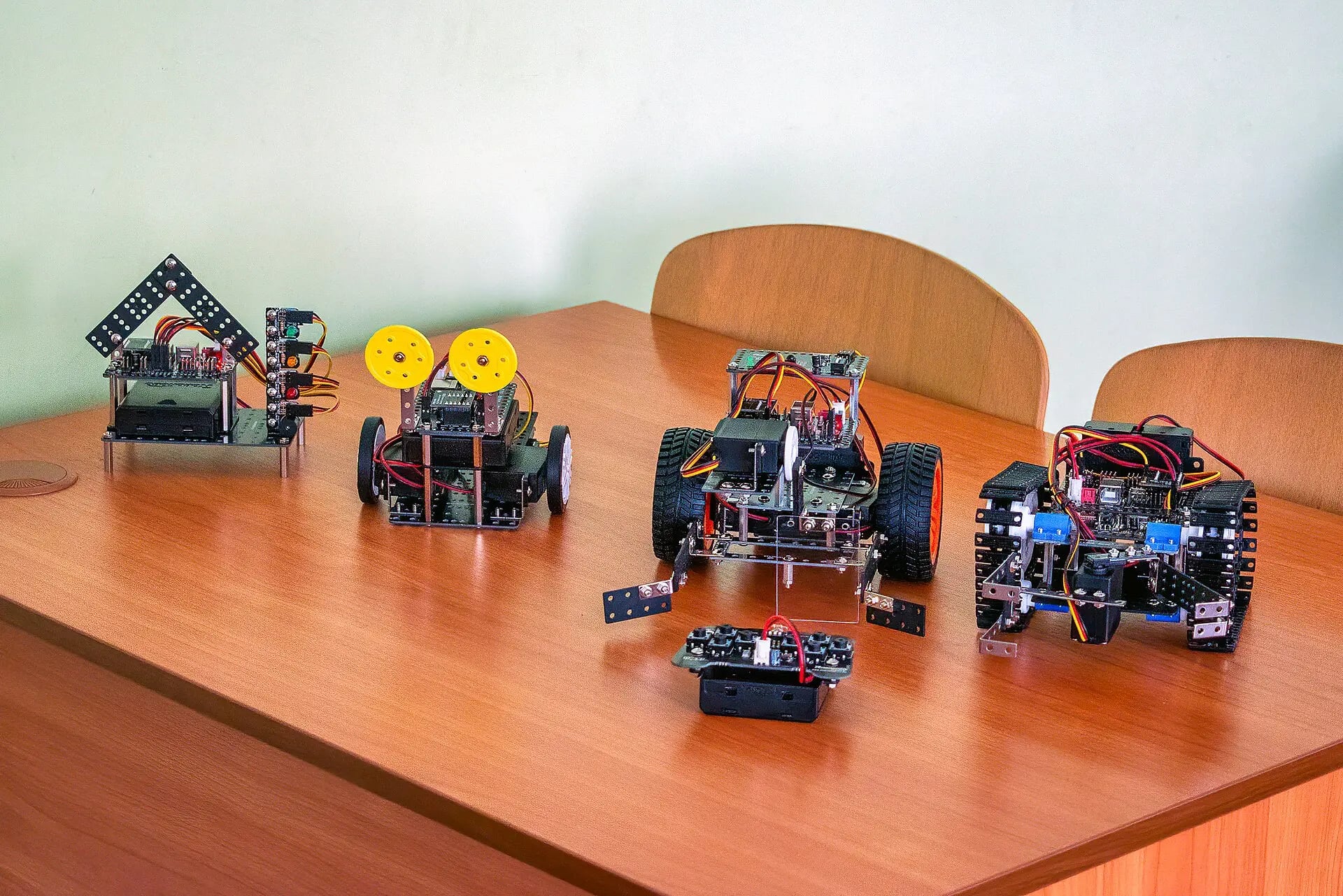
Four student-built robots lined up on a classroom table: a traffic-light rig, a two-wheel buggy, a large wheeled rover, and a tracked chassis.
01

Annual School Program

  • Grades VI–IX · XI–XII
  • 40 weeks · 4 terms

The flagship. A full academic year of robotics, AI, and drone technology delivered inside your school's timetable — four terms from Foundations to Advanced Systems, with buffer weeks pre-absorbed for Dashain–Tihar, terminal exams, and school events.
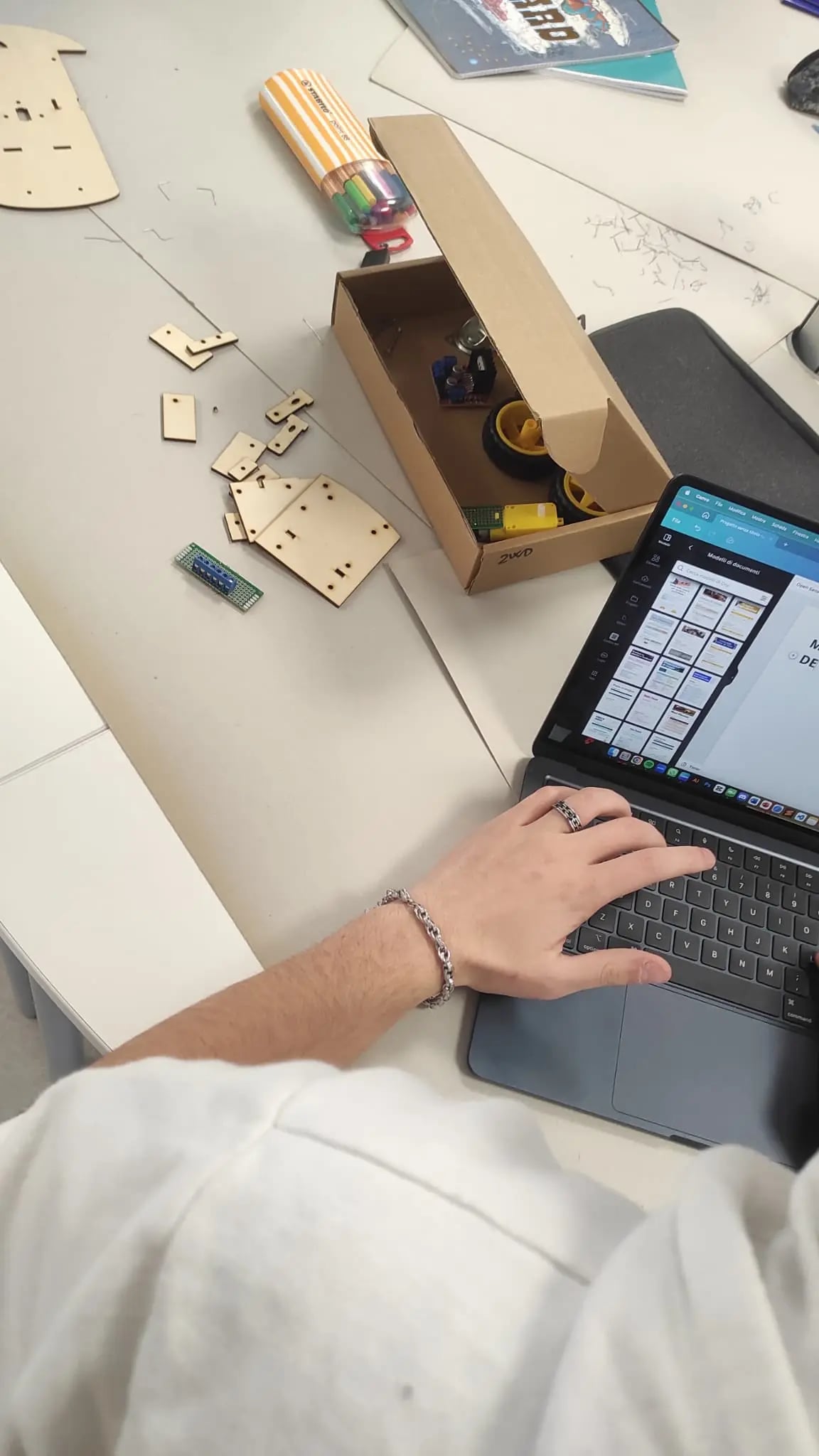
Overhead view of a bench: laser-cut plywood chassis parts, a kit box of motors and wheels, and a student working at a laptop.
02

Weekly Training

  • Grades VI–XII
  • Weekly sessions

For schools not yet ready to timetable the full year. One session a week on the same platform spine, the same Safety Passport, and the same fortnightly gates — a working entry point that upgrades cleanly into the annual program.

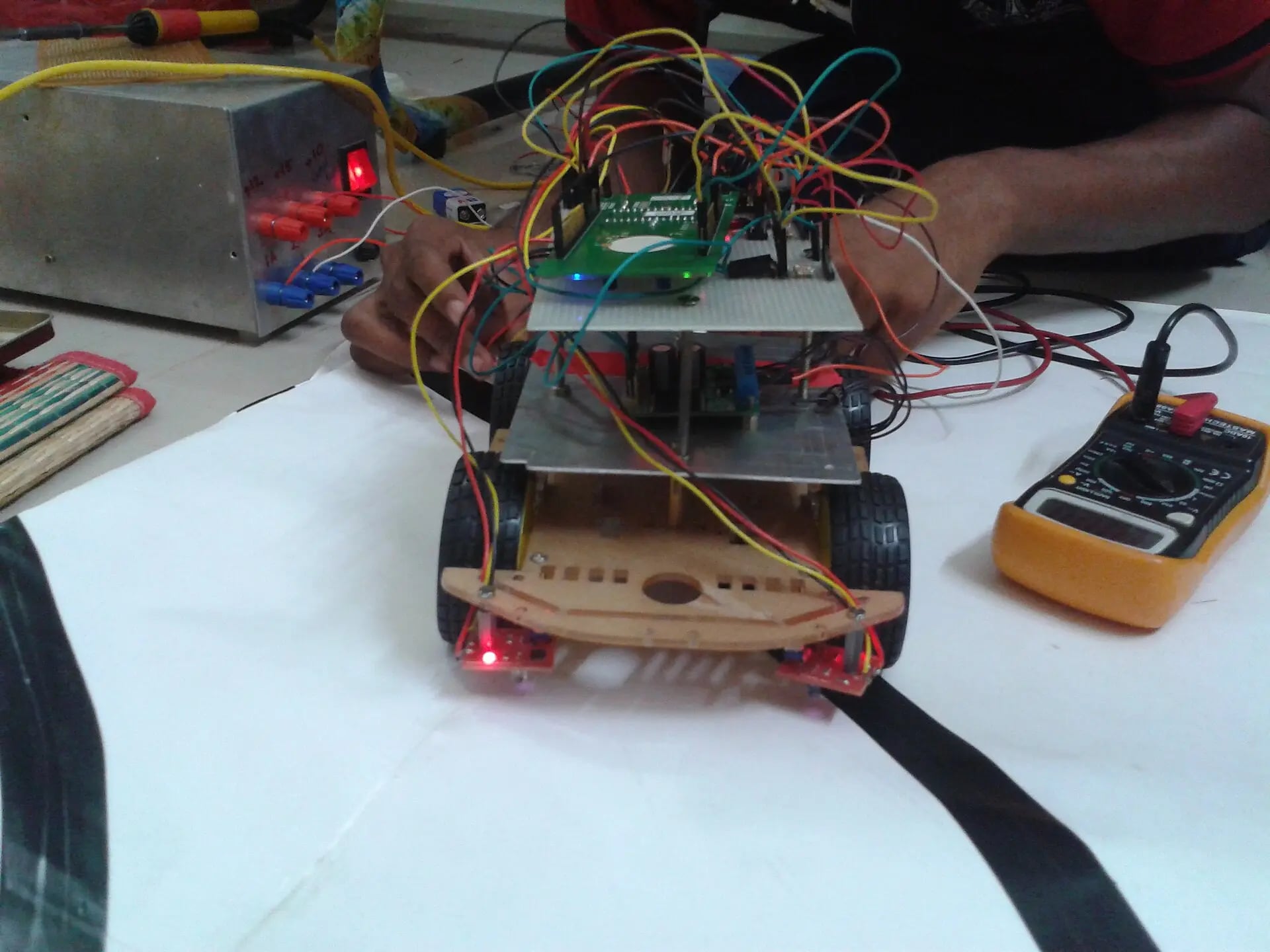
A two-deck robot car under test on a lab bench, wired to a bench power supply with a multimeter beside it.
03

In-House Robotics Training

  • Students & small crews
  • At our Kathmandu lab

Training at our own lab in Buddhanagar, for students whose school does not run a program yet and for holiday cohorts. Small crews, full bench and hardware access, and the same Nepal Project Bank builds.

The year

Forty teaching weeks, inside the timetable

Not an after-school club that competes with tuition. Four ten-week terms that sit in the school day and follow the Nepali academic calendar.

  • Term 110 weeks
    Baishakh – Asar

    Foundations. Mechanism, drivetrain, and block coding on micro:bit.

    Assessment Bench check

  • Term 210 weeks
    Shrawan – Ashoj

    Sensing and control. Arduino and ESP32, wired sensors, actuators.

    Assessment Circuit viva

  • Term 310 weeks
    Kartik – Poush

    Intelligence. Python, dataset collection, on-device inference.

    Assessment Notebook review

  • Term 410 weeks
    Magh – Chaitra

    Flight and capstone. Drone build, then a project-bank piece.

    Assessment Showcase

Grades VI to VIII run the same arc at kit depth — pre-built modules, block coding, guided builds. Grades IX to XII run it on bare boards, in Python and C, and are expected to debug their own wiring.

Project bank

What students actually leave with

Every term ends in something that runs. The bank is the running list schools pick from, sized to the grade band and to the hardware already in the lab.

Grades VI – VIII

Guided builds on kit hardware

  • micro:bit
  • Arduino
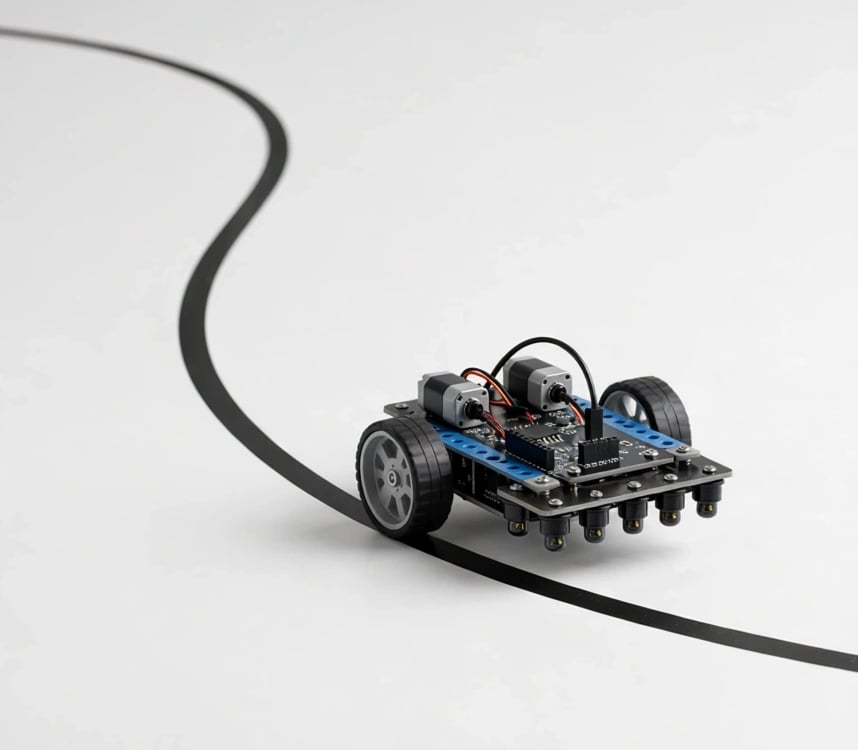
  • A small two-motor rover with a row of reflectance sensors, tracking a curved black line across a white surface.

    Line-following rover

    Reflectance sensors, a two-motor drivetrain, and the first taste of a control loop that overshoots.

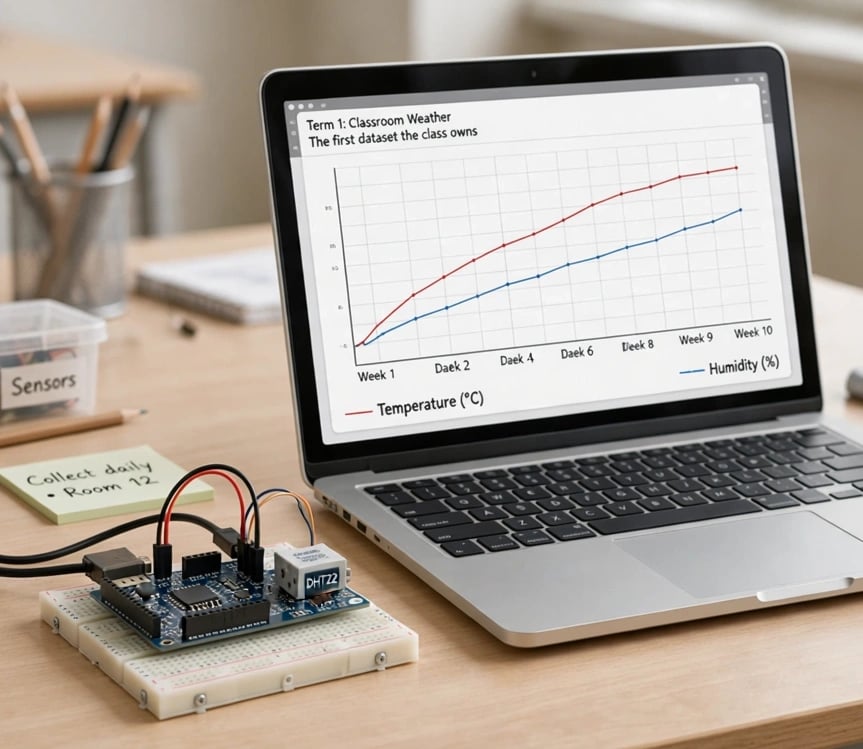
  • A breadboarded microcontroller with a DHT22 sensor beside a laptop plotting a term of temperature and humidity readings.

    Classroom weather station

    Temperature and humidity logged across a term, then plotted — the first dataset the class owns.

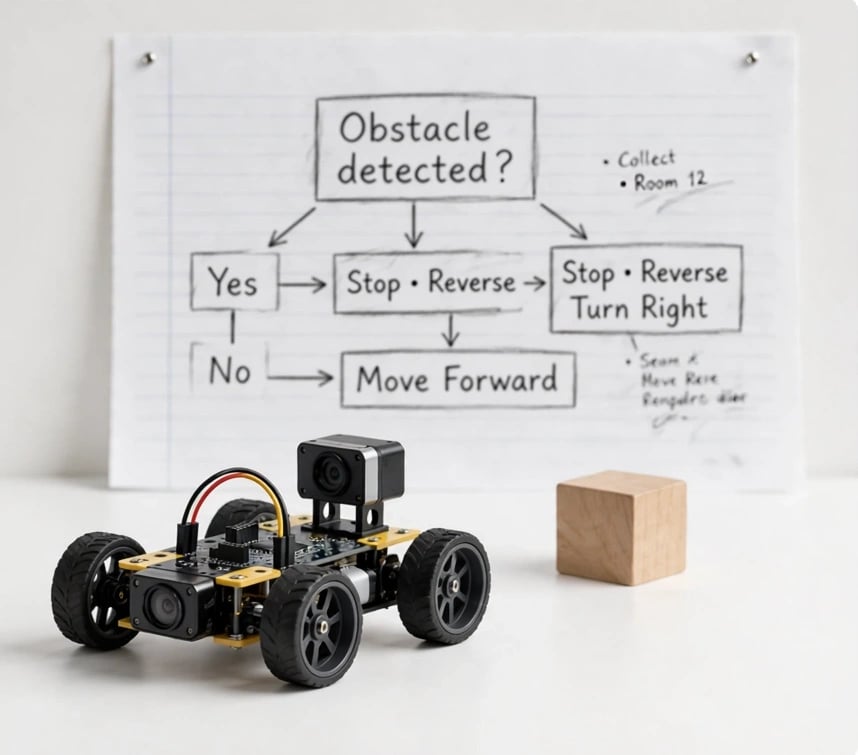
  • A four-wheel buggy with an ultrasonic sensor facing a wooden block, in front of a hand-drawn decision-tree flowchart.

    Obstacle-avoiding buggy

    Ultrasonic ranging and a decision tree the students write out on paper before they code it.

Grades IX – X

Bare boards, own wiring

  • ESP32
  • Arduino
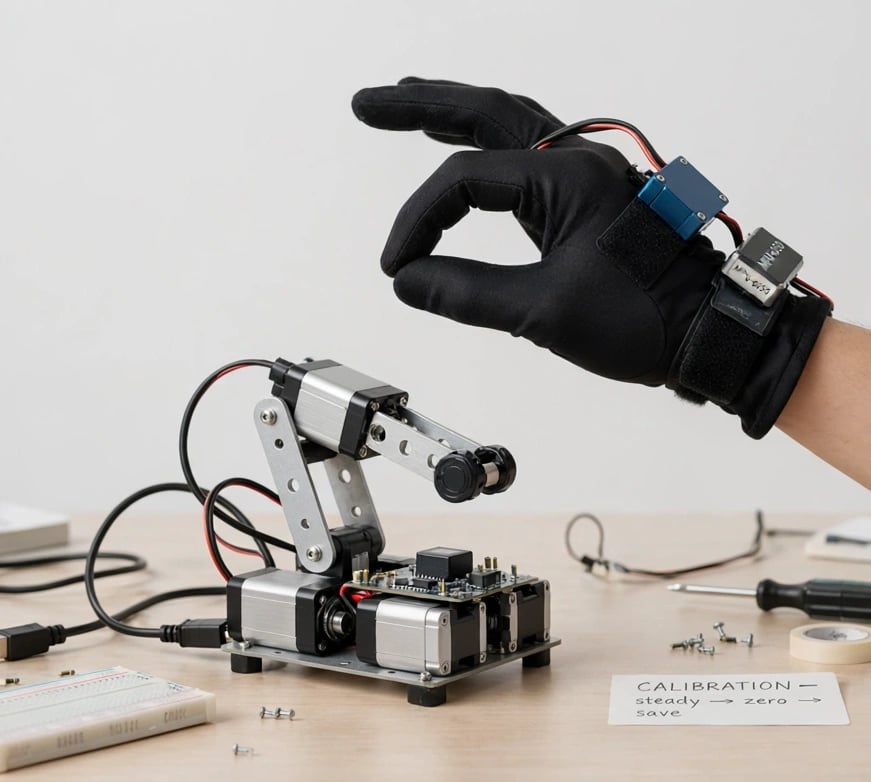
  • A gloved hand wearing a wrist-strapped accelerometer, pinching above the aluminium servo arm it drives on the bench below.

    Gesture-controlled arm

    An accelerometer drives a three-servo arm. Calibration and drift are the lesson, not the servos.

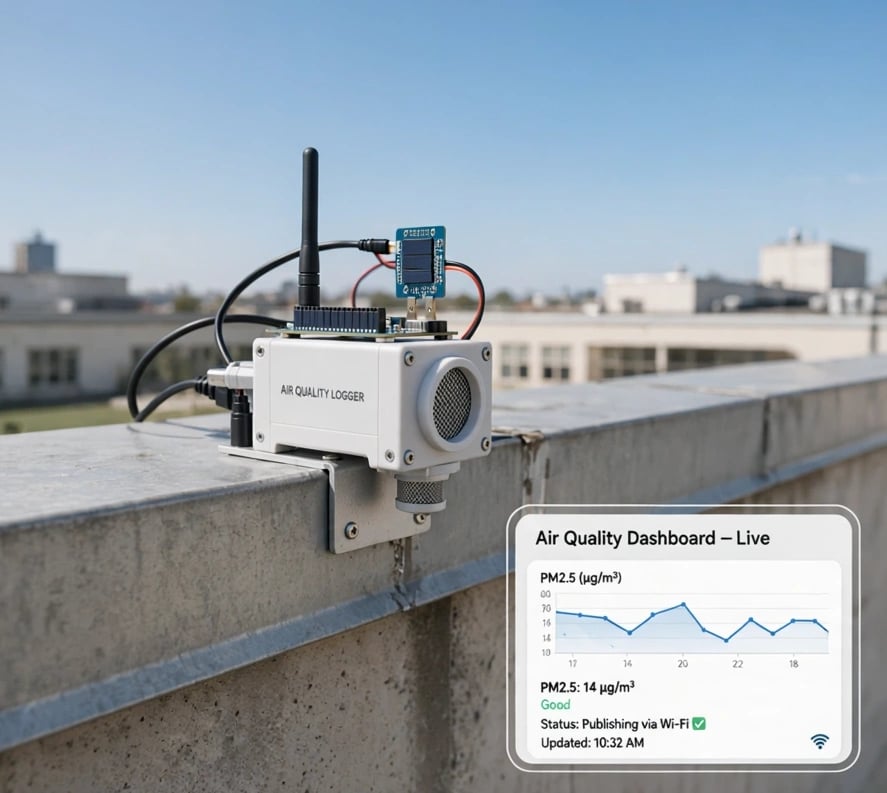
  • A weatherproof particulate logger with a Wi-Fi antenna clamped to a rooftop parapet, its live PM2.5 dashboard inset beside it.

    Air-quality logger

    A particulate sensor on the school roof, publishing to a local dashboard over Wi-Fi.

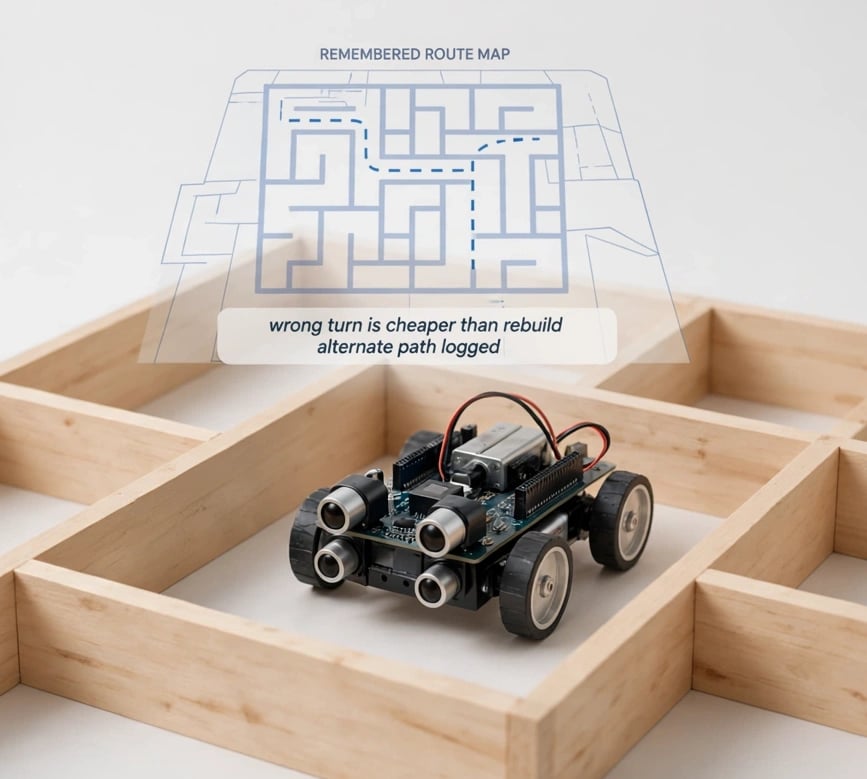
  • A four-wheel robot ringed with ultrasonic sensors inside a plywood maze, with its remembered route traced on a map above.

    Autonomous maze solver

    Wall-following, then a remembered route. The first project where a wrong turn is cheaper than a rebuild.

Grades XI – XII

Capstone work, defensible results

  • Camera drone
  • Raspberry Pi
  • Crop-health drone survey

    A mapped flight over a plot, imagery stitched, and a simple index computed per row.

  • Nepali keyword spotter

    Students record and label their own audio, train a small model, and run it on-device.

  • Warehouse AGV

    Line network, fiducial markers, and a dispatch queue. The closest thing here to industrial work.

Safety

The part schools ask about first

Lithium batteries, hot irons, and spinning propellers in a room full of teenagers. These are the standing rules, and they are the same at every partner school.

  • One instructor per twelve students

    Bench work is never unsupervised. A second adult from the school is present for any session involving power tools or flight.

  • Soldering from grade IX only

    Eye protection, a fume extractor at the bench, and a demonstrated pass on the technique before a student is allowed a hot iron.

  • Lithium cells charged in fire-safe bags

    Charging happens in the lab, in a bag, on a logged timer — never overnight, never in a classroom or a bag left in a locker.

  • Flight indoors, inside a net

    Routine flying is done in a netted cage. Outdoor flying is instructor-only and follows the prevailing CAAN rules for the airframe and site.

  • Incidents logged and reviewed each term

    Every cut, burn, crash, and near-miss is written down. The log goes to the school with the term report, whether or not anything happened.

Your students are ready for this.The lab is the only thing missing.

  • A 40-week plan mapped to your calendar
  • A visit to the Kathmandu lab, no commitment
Bring it to your school